
My Portfolio
About My Work Placement
Only About Children Alexandria is a long day care centre located at 95 Burrows Road, Alexandria, NSW 2015. It is open Monday to Friday from 6:30 am to 6:30 pm and provides care and education for children aged six weeks to school age.
There are four rooms in the centre:
-
Nursery (0–2 years)
-
Toddlers (2–3 years)
-
Preschool 1 (3–4 years)
-
Preschool 2 (4 to school age)
The centre has big outdoor play areas with a sandpit, bike track, and water play space. Indoors, the rooms are filled with natural materials to support children’s learning (Vacancies, Enroll Now at Only about Children Alexandria in Alexandria, NSW 2015, 2015).
During my placement, I will be working in both the Nursery room and the Toddlers room, spending five weeks in each. I will support children’s learning through play, help with daily routines like meals and rest time, and build warm and trusting relationships with them.
My educational leader, who is ECT (Early Childhood Teacher) qualified, will guide and support me with my teaching practices. She will give me feedback and help me grow as an educator.
Ratings and Reviews:
National Quality Standard (NQS) Rating: The center has a rating of 'Meeting' the National Quality Standard, and the most recent rating was achieved in October 2024 (Vacancies, Enroll Now at Only about Children Alexandria in Alexandria, NSW 2015, 2015).
Parent Reviews:
Parents have been highly pleased with the service delivered by the center. A parent stated, "We are so happy with everything about OAC Alexandria. The staff are lovely and caring; the management team is involved and available." (Vacancies, Enroll Now at Only about Children Alexandria in Alexandria, NSW 2015, 2015).
Facilities and Programs
The center boasts enormous outdoor playgrounds, sand pit, bike track, and water space. Indoor areas are large and feature natural materials to facilitate play and communication. The educators also organize frequent outings to surrounding areas such as Sydney Park, Bunnings and The Grounds of Alexandria to further extend children's learning.


Reflection on Centre's Philosophy
The philosophy of Only About Children Alexandria aligns with my values, emphasizing inclusion, relationships, sustainability, and play-based learning. Its commitment to a secure and nurturing environment reflects the Circle of Security model (Cooper et al., 2009), while its recognition of families as first educators aligns with Bronfenbrenner’s ecological systems theory (Guy-Evans, 2024). The focus on child-led learning supports play-based approaches (Edwards et al., 2019), and the emphasis on sustainability fosters environmental responsibility (Davis, 2015).
However, the philosophy could enhance cultural responsiveness by embedding diverse perspectives (Richardson, 2018) and clarify implementation strategies for holistic learning (Siraj-Blatchford et al., 2010). A balance between child-led exploration and educator guidance would further support deeper learning (Ryan & Deci, 2017). Strengthening these aspects would ensure an inclusive, developmentally supportive environment for all children.
.jpeg)
The center’s display of children’s experiences, linked to the Early Years Learning Framework and developmental theorists, provides a visible and reflective connection between practice and theory, promoting understanding among staff, parents, and visitors while reinforcing the center’s commitment to intentional and developmentally appropriate learning (ACECQA, 2022).
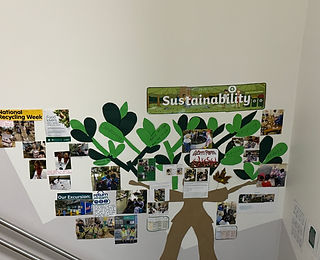
According to the Centre Director, sustainability is a key focus of the center’s ongoing initiatives, with practices designed to promote environmental awareness embedded throughout the learning environment. During my observation, I noticed a sustainability tree displayed prominently on the wall, featuring photos that document the children’s engagement in sustainability practices. This visual representation celebrates the children’s active involvement in sustainability projects while also serves as a reminder of the center’s commitment to fostering environmental stewardship. By incorporating such displays, the center effectively aligns with the Early Years Learning Framework, which emphasizes the importance of sustainable practices in early childhood education to promote a sense of responsibility for the environment (ACECQA, 2022). Additionally, these practices reflect key principles of ecological sustainability, as outlined in Bronfenbrenner’s ecological systems theory, which highlights the interconnectedness between individuals and their environment.
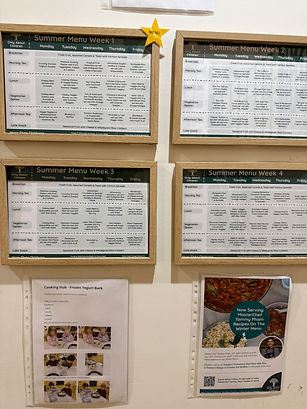
As discussed with my Educational Leader, the center adopts a thoughtful approach to meal planning with a rotating four-week seasonal menu. This menu includes options to cater to various dietary needs, such as cultural preferences, pureed meals, and vegetarian options, ensuring that all children’s needs are met. The flexibility to accommodate family preferences further emphasizes the center’s commitment to providing a personalized experience for each child. This approach reflects the values of the Early Years Learning Framework (ACECQA, 2022), promoting a sense of belonging and respect for diversity while supporting children's well-being. Additionally, this practice aligns with the National Quality Standard (NQS) Quality Area 2, which focuses on ensuring children's health and safety through appropriate and inclusive nutritional practices.

Centre's Physical Environment
Outdoor Environment
The outdoor environment at Only About Children Alexandria is designed to promote children's physical, cognitive, and social development while aligning with key frameworks and professional standards in early childhood education. Featuring a slide connected to the sandpit, bumps, a bridge, an obstacle course, a garden, a blackboard, and an Aboriginal corner, the space supports play-based pedagogies and offers rich opportunities for gross motor skill development, creativity, and problem-solving (Department of Education, Skills and Employment, 2020). The environment adheres to the National Quality Standards (NQS) and National Curriculum Frameworks, ensuring that it provides a safe, engaging, and inclusive space for all children, including those with exceptionalities (Australian Children's Education & Care Quality Authority, 2020). By fostering respectful relationships and responsive engagement with children, the outdoor space encourages collaboration and positive social interactions, while also integrating Aboriginal and Torres Strait Islander perspectives to promote cultural competence and inclusion (Early Childhood Australia, 2020). Additionally, the garden area allows for exploration of sustainability practices, supporting ecological awareness and environmental stewardship (Green, 2020). This outdoor environment demonstrates the importance of embedding equity, diversity, and cultural respect within the curriculum and offers a rich learning space that reflects the values of professionalism, dignity, and holistic child development.


.jpg)
outdoor environment for children to learn and explore.

Outdoor cultural/ indigenous corner with related learning resources for children to explore and play
Reflection on Nursery's Indoor environment
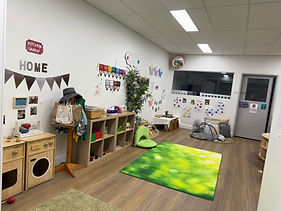
The indoor nursery room at Only About Children Alexandria is a spacious and calm environment designed to support the development of babies aged 0–2 years. Most of the resources are placed at children’s eye level, which encourages independence and active engagement in play (Department of Education, 2022). The room features age-appropriate, safe materials and soft flooring that support crawling and exploration. Visual displays like photos and posters help foster a sense of identity and belonging, aligning with the Early Years Learning Framework (EYLF) Outcome 1: Children have a strong sense of identity (ACECQA, 2022). However, the space is not sectioned into specific play areas, and the middle of the room appears somewhat empty. Introducing low shelving or soft dividers could create more defined learning zones, supporting children’s exploration and discovery while maintaining safety (Curtis & Carter, 2015).
Nursery's Communication board
The communication board near the prep room at Only About Children Alexandria is an effective tool for ensuring clear and immediate communication among staff members. Its location makes it easily visible to anyone entering the room, which is crucial for promoting safety and awareness. The board displays important information, such as a list of children’s allergies and medical conditions, allowing staff to quickly assess potential risks and respond appropriately. This is particularly useful for new or temporary staff members, ensuring they are immediately informed of any medical requirements or precautions. According to the room leader, the communication board is used to relay important information, helping staff members stay informed and maintain consistency in care. This system supports a safe and well-coordinated environment, aligning with the National Quality Standard (NQS) for Safety and Wellbeing (ACECQA, 2022).

Cultural/Indigenous corner

The Indigenous corner at Nursery is a thoughtful inclusion that reflects the service’s commitment to cultural diversity and respect for Aboriginal and Torres Strait Islander cultures. This area includes a table and chairs, children’s artwork, culturally relevant posters, and books and resources related to Indigenous culture. Additionally, a wall display of the word "hello" in different languages promotes inclusivity and acknowledges the multicultural nature of the community. While the corner supports children's awareness of Indigenous perspectives through visual displays, incorporating more natural, hands-on resources, such as wooden artefacts, natural fibres, or traditional musical instruments, could further enrich children's sensory experiences and deepen their connection with Aboriginal and Torres Strait Islander culture. According to the Early Years Learning Framework (EYLF V2.0), embedding Indigenous perspectives and providing opportunities for children to engage with diverse materials is vital in fostering respect, curiosity, and inclusive learning environments (ACECQA, 2022).
Toddlers Room
When children turn two, they are transitioned to the toddler room, as explained by the Educational Leader. The physical environment in the toddler room is quite different from the nursery. The room is larger and includes more tables and chairs, supporting toddlers’ growing independence and involvement in group activities. Some artworks and posters are displayed at children's eye level, while others are placed higher, which may limit accessibility for the children. Compared to the nursery, the toddler room has more varied resources, including a construction area and a visible family tree display, helping to strengthen children’s identity and connection to their families.
.
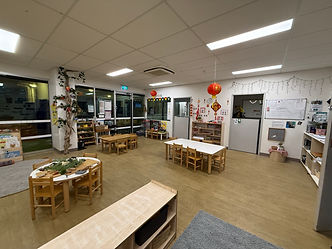

Unlike the nursery, where the bin is kept in the prep room and managed by educators, the toddler room has a bin inside, encouraging children to take more responsibility in tidying up. The availability of accessible resources allows toddlers to choose and engage in play independently when not participating in planned experiences, supporting their autonomy and decision-making skills. These practices align with the Early Years Learning Framework (V2.0), which emphasizes environments that promote independence, agency, and a strong sense of identity (ACECQA, 2022)
In both the nursery and toddler rooms at Only About Children Alexandria, there is a dedicated “OAC Learning Hub” that effectively communicates with families and highlights the learning taking place. This area includes a "Meet Our Team" display, which shares educators’ photos, qualifications, philosophies, and interests—helping families feel connected and informed about who is caring for their children. Underneath this, the curriculum is visibly separated into indoor and outdoor learning plans, along with a clear display of the children's daily routine titled “Our Daily Rhythm.” This transparent and informative setup supports continuity of care and strengthens relationships between families and educators. It also reflects the principles of the Early Years Learning Framework (V2.0), which emphasizes the importance of partnerships with families and ongoing communication to support children’s sense of belonging, being, and becoming (ACECQA, 2022).
